In addition to being a simple way to add some color to your floor dcor, replacing carpet tiles on an existing carpet is a lovely way to give back to your flooring. You may use the space as it is with a pleasant, new appearance while cutting down on the amount of time you would normally need to remove the old carpet. But before you can forward with the work, there are still a few questions you need to respond to.
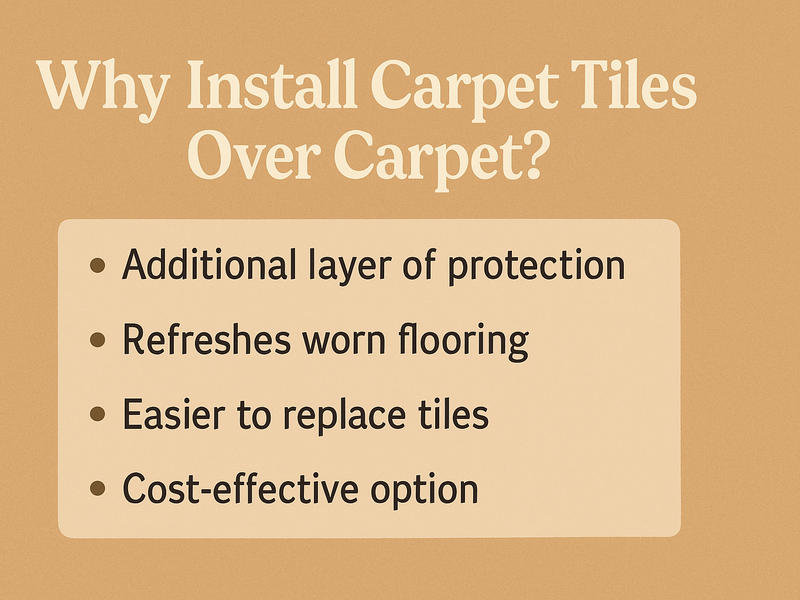
Flexibility, ease of upkeep, and limitless design possibilities are all combined in carpet tiles. If your current carpet is in good shape but you want the office to look different or be more functional, placing them on top of it could be a fantastic approach to give the floor a new lease on life.
Some reasons to choose Nylon carpet tiles include:
Technically, it is possible to put carpet tiles on the existing carpet; the key to a durable and useful outcome is to do it correctly. You may find the following little guide useful:
Vacuum the Carpet: The office carpet must be vacuumed thoroughly before laying the carpet tiles. It is important to remove dust, dirt, and other small particles to ensure a clean surface. If the carpet is dry, the vacuum cleaner can also be used again to achieve a deeper clean.
It is absolutely essential to check whether the old carpet is extremely soiled or damaged beyond repair before moving ahead with any solution.
Material: Choose carpet tiles made of nylon or polypropylene, as these materials are durable and suitable for installation over an existing carpet.
Padding: If the nylon carpet tiles are thin, you may consider adding a layer of padding between the old carpet and the new tiles. However, some carpet tiles already come with built-in padding, making the installation even easier.
Whether you are renovating the room or simply want to raise your floor with some warmth, carpet tiles could be the perfect solution for a diy.
Begin at the Center: Start placing the tiles from the center of the office room. This approach ensures that all edge cuts are more balanced and evenly sized.
You can mark a grid on the floor using chalk or use a laser level to create guiding lines. These lines will help you position the tiles accurately and ensure a neat, uniform layout.
Peel and Stick: In many cases, installation is extremely straightforward because the adhesive backing simplifies the process. Just peel off the liner and press the tiles firmly onto the existing carpet surface.
Interlocking Tiles: Certain carpet tile designs feature interlocking edges, which means no glue is required. Simply snap the tiles together, and they will create a smooth, continuous appearanc
Press the Tiles: Gently but firmly press down on each tile to ensure it bonds well with the carpet beneath, similar to smoothing out fabric.
Trim the Edges: For a clean and polished finish, use a carpet knife to carefully trim any tile sections that extend beyond the edges of the office space.
Allow to Set: Give the carpet tiles some time to settle so the adhesive can fully bond. It’s best to leave the floor undisturbed for a while before walking on it or moving to the next step.
Check for Gaps: As you inspect the floor, make sure there are no spaces or openings between the tiles. Adjust any tiles that are not aligned properly to maintain a smooth and uniform surface.

No Need to Remove Old Carpet: Keeping the existing carpet in place helps you save both time and labor costs. Since there's no removal required, the installation process becomes quicker and more budget-friendly.
Personalization: With a wide range of colors, textures, and tile sizes, carpet tiles give you the freedom to style your space in a unique and customized way.
Easy Maintenance: If a tile becomes damaged or stained, you can replace just that single piece without having to remove the entire carpet.
Soundproofing Benefit: Carpet tiles help reduce noise, making them a great choice for offices or rooms where sound absorption is important.
Durability: Carpet tiles installed over an existing carpet typically have a shorter lifespan compared to those placed directly on the subfloor.
Potential for an Uneven Surface: The old carpet may create an irregular base, which can affect the appearance of the new tiles. Ensuring the surface is flat and even is essential for achieving a smooth, professional finish.
Moisture Concerns: Confirm that the old carpet is completely dry before installing new tiles on top. Any leftover moisture can lead to mold growth beneath the tiles.
